
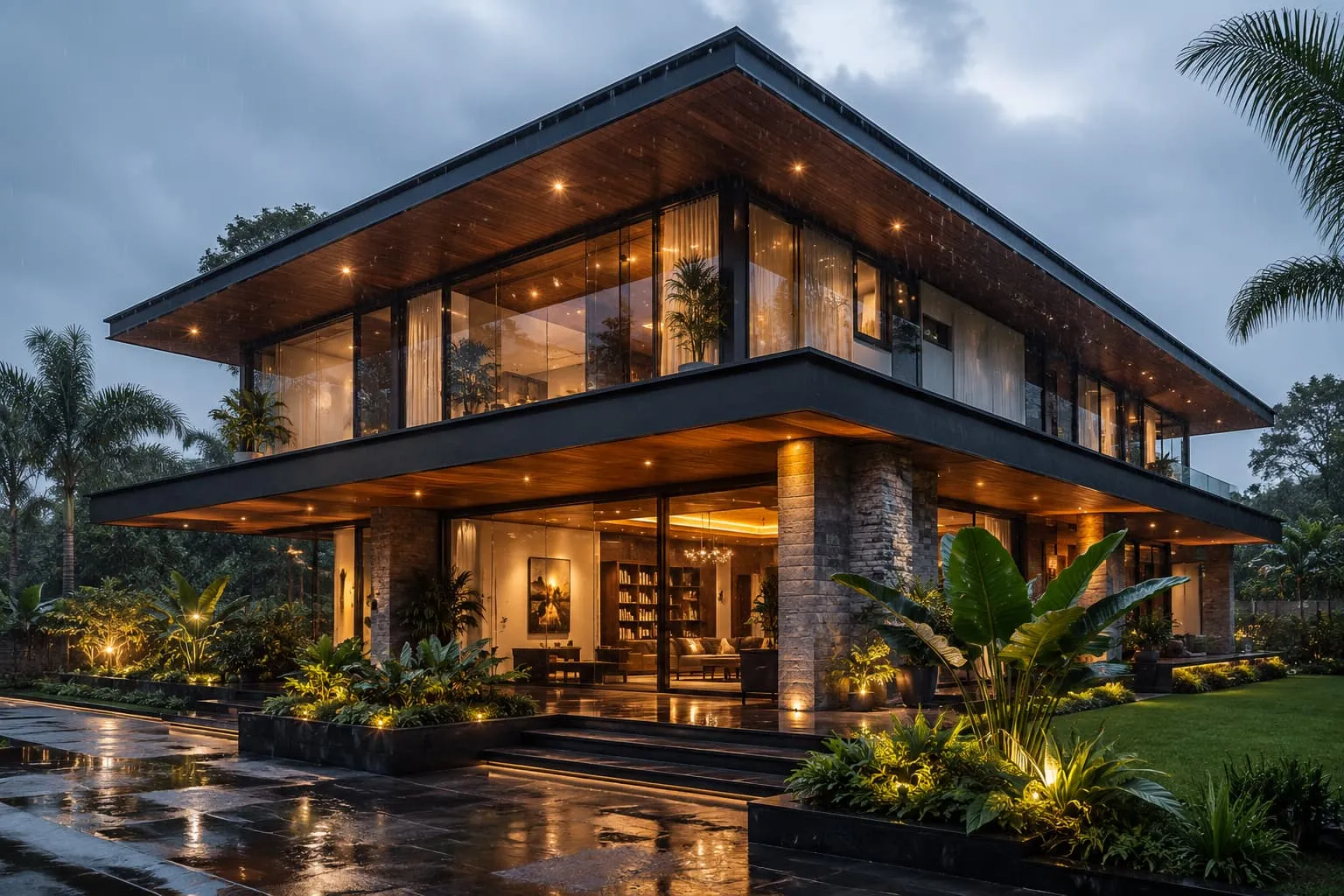
Kampala’s tropical climate can be beautiful, but intense sun, heavy rainfall, humidity, and flash runoff can quickly expose weak design decisions.
Kampala’s tropical climate can be beautiful, but intense sun, heavy rainfall, humidity, and flash runoff can quickly expose weak design decisions. Climate-responsive buildings are more comfortable, easier to maintain, and better protected over time.
Good climate design starts from the outside in. Roof shape, overhang depth, gutter sizing, ground levels, site drainage, window protection, wall detailing, damp-proofing, and ventilation all determine how a building performs during rainy seasons and hot periods. A design that ignores climate may look good at handover but become expensive to maintain after a few years.
Conclusion and OGARU advantage: OGARU designs buildings for the real conditions they will face. Our team considers rainfall, heat, drainage, maintenance, and user comfort from the beginning so clients receive buildings that perform well beyond the first year.
Good climate design starts from the outside in. Roof shape, overhang depth, gutter sizing, ground levels, site drainage, window protection, wall detailing, damp-proofing, and ventilation all determine how a building performs during rainy seasons and hot periods. A design that ignores climate may look good at handover but become expensive to maintain after a few years.
- Roofing and overhangs: Deep overhangs protect walls, windows, doors, and walkways from direct sun and rain splash.
- Oversized drainage capacity: Gutters, downpipes, channels, soakaways, and stormwater routes should be sized for intense rainfall events, not average conditions only.
- Damp-proofing: Foundations, ground floors, walls, and retaining structures need proper damp-proof membranes, drainage layers, and detailing to prevent rising damp.
- Heat management: Shading, cross-ventilation, reflective roofing, ceiling height, and landscape design can improve comfort and reduce cooling demand.
Conclusion and OGARU advantage: OGARU designs buildings for the real conditions they will face. Our team considers rainfall, heat, drainage, maintenance, and user comfort from the beginning so clients receive buildings that perform well beyond the first year.